What is the difference between MMCX and 2-pin detachable IEM Guide
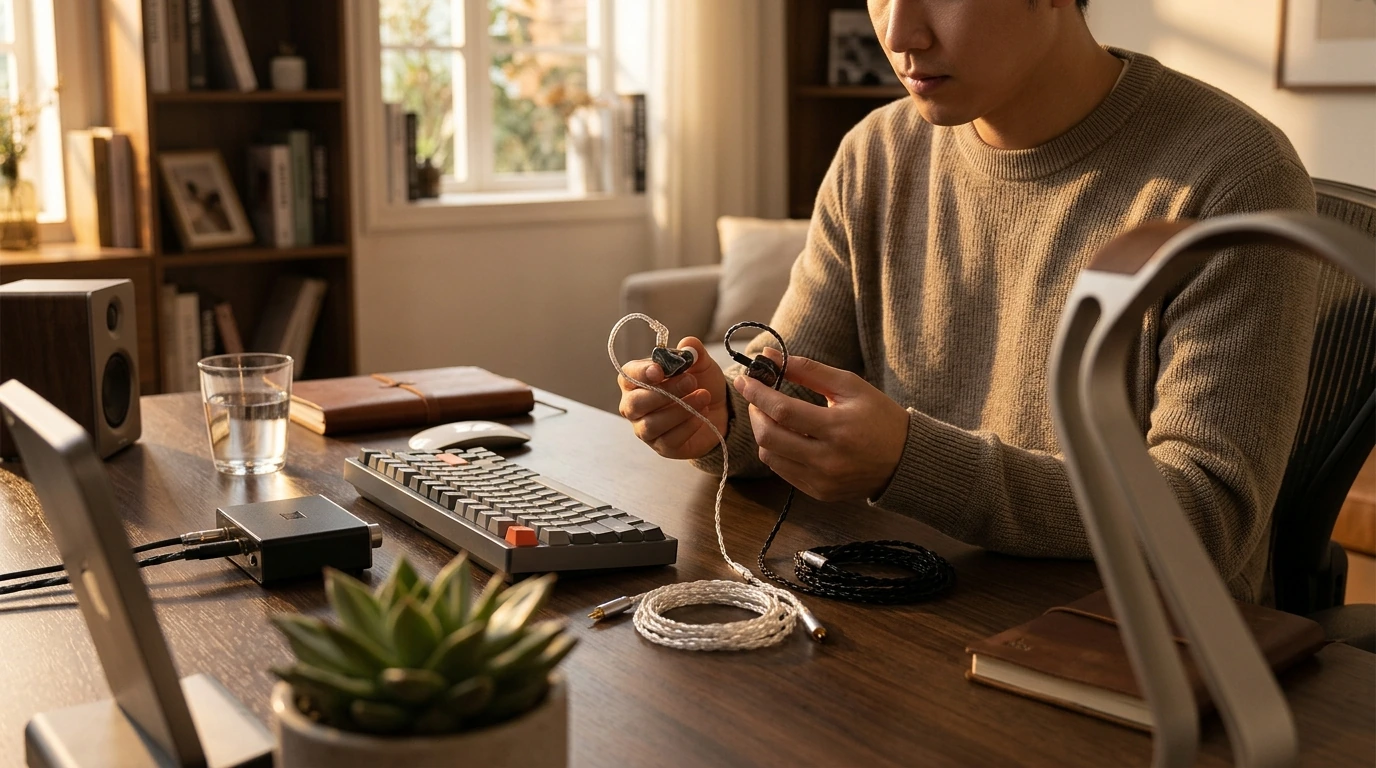
What is the difference between MMCX and 2-pin detachable IEM cables, and which is more durable?
MMCX and 2-pin are the two most common ways detachable IEM (in-ear monitor) cables connect to the earpieces. The practical differences come down to how they lock in place, how they rotate, and what typically fails first with daily use.
MMCX: snap-on with 360° rotation
MMCX connectors use a round, snap-fit mechanism that clicks into place and can rotate freely. That rotation can reduce cable twist and make it easier to achieve a comfortable fit around the ear. The trade-off is that the internal spring contact and retention ring can wear over time, leading to a loose connection, intermittent audio, or a connector that pops off more easily—especially if the cable gets yanked or frequently swapped.
2-pin: friction-fit pins with a fixed orientation
2-pin connectors (commonly 0.78mm) use two small pins that slide into matching sockets on the IEM. Because the orientation is fixed, there’s no free rotation; instead, the fit depends on pin alignment and consistent insertion depth. Typical failure points include bent pins (often from misalignment), loosened sockets, or cracked housings if the connector is forced at an angle.
Which is more durable?
In real-world use, a well-made 2-pin connection is often the more durable option because it’s mechanically simpler and tends to maintain a stable electrical contact when left connected. MMCX can also be durable, but it’s more sensitive to wear from frequent disconnects and to damage from side-load stress. For maximum longevity, whichever type you choose, avoid pulling by the cable, disconnect by gripping the plug, and store IEMs in a case so the connectors aren’t constantly stressed.
For more on detachable cable setups and what to look for in a bass-focused IEM build, see the full guide here: https://spiritine.com/guide-13-8mm-hi-res-iems-detachable-mmcx-cable-deep-bass/.
FAQ
Do I need a special tool to remove an MMCX cable?
No—most MMCX cables detach by pulling straight out while gripping the connector housing, not the wire. If it’s tight, gently wiggle while keeping the pull straight to avoid stressing the socket.















Leave a comment