Planar vs Dynamic IEMs: Sound, Speed, and Bass
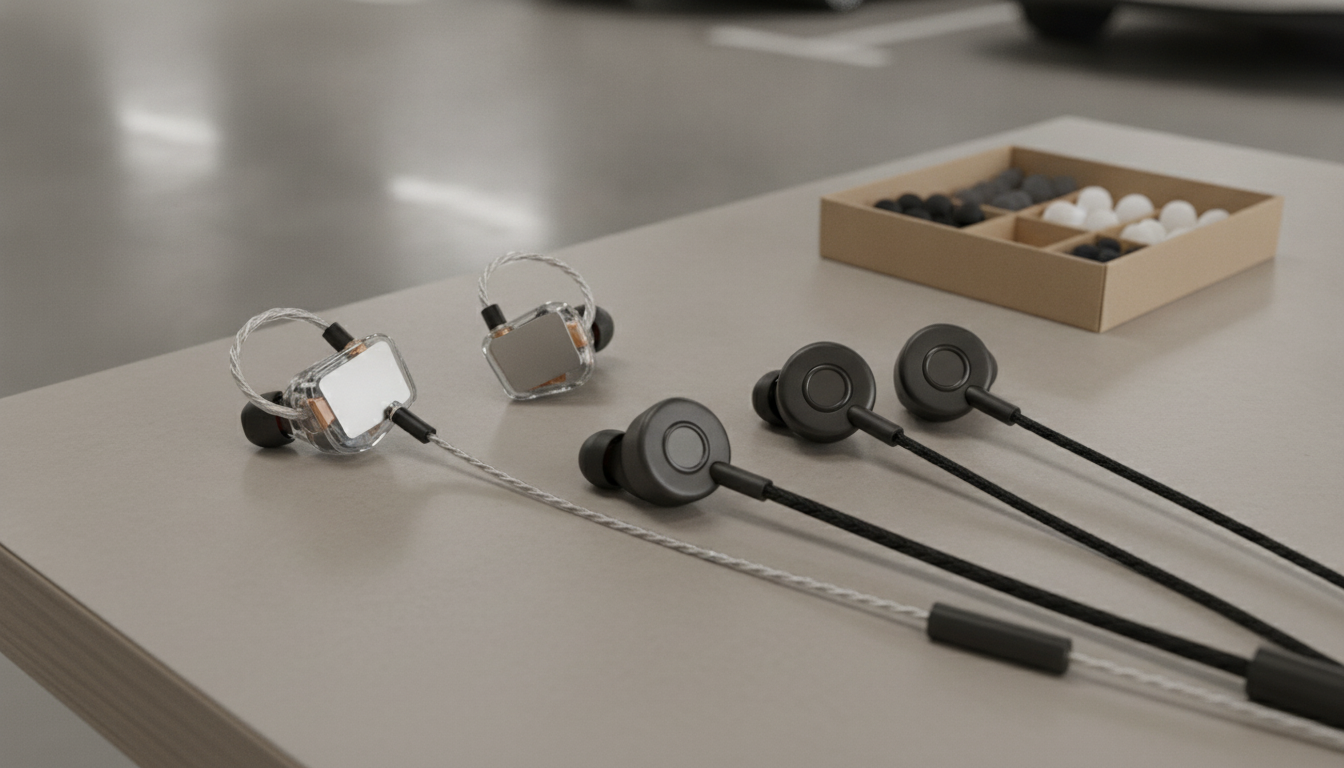
What are planar magnetic in-ear earphones, and how do they sound compared to dynamic driver IEMs?
Answer
Planar magnetic in-ear earphones (often called planar IEMs) use a thin, flat diaphragm with an embedded conductive trace suspended between magnets. When current flows through the trace, the diaphragm moves as a unified surface to create sound. Dynamic driver IEMs, by contrast, work more like tiny speakers: a voice coil moves a cone- or dome-shaped diaphragm from a single driving point.
That different “motor” tends to create a different flavor of sound. Planar IEMs are known for fast transient response—notes start and stop quickly—so drum hits and plucked strings can feel crisp and tightly controlled. Many listeners also describe a cleaner separation between instruments during busy passages, with a smooth, low-distortion character that can make details easier to follow.
Dynamic driver IEMs often excel at weight and physical impact, especially in the sub-bass. Because of how air is moved, a good dynamic driver can deliver a more rounded, tactile punch that some people find more natural for electronic, hip-hop, and rock. Tonally, dynamics also vary widely: some are warm and thick, others are bright and airy.
In practice, the “planar vs. dynamic” difference isn’t purely about sound; it can show up in real-world pairing too. Planar IEMs frequently like a bit more power to sound lively and controlled, while many dynamic IEMs reach satisfying volume more easily from phones or basic dongles. Fit and seal matter for both, but they can be especially critical for bass performance.
For a deeper look at planar IEM design choices, fit, and power needs, see the full guide here: https://spiritine.com/guide-planar-iems-wood-faceplates-fit-sound-power/.
For Planar vs Dynamic IEMs: Sound, Speed, and Bass, the best answer depends on fit, material, care instructions, and how the product will be used day to day.
FAQ
Do planar IEMs need an amp?
Not always, but many benefit from a stronger source than a phone headphone jack. A good dongle DAC/amp can improve bass control, dynamics, and overall headroom.
















Leave a comment