Overweight Dog Feeding: Daily Amount by Goal Weight
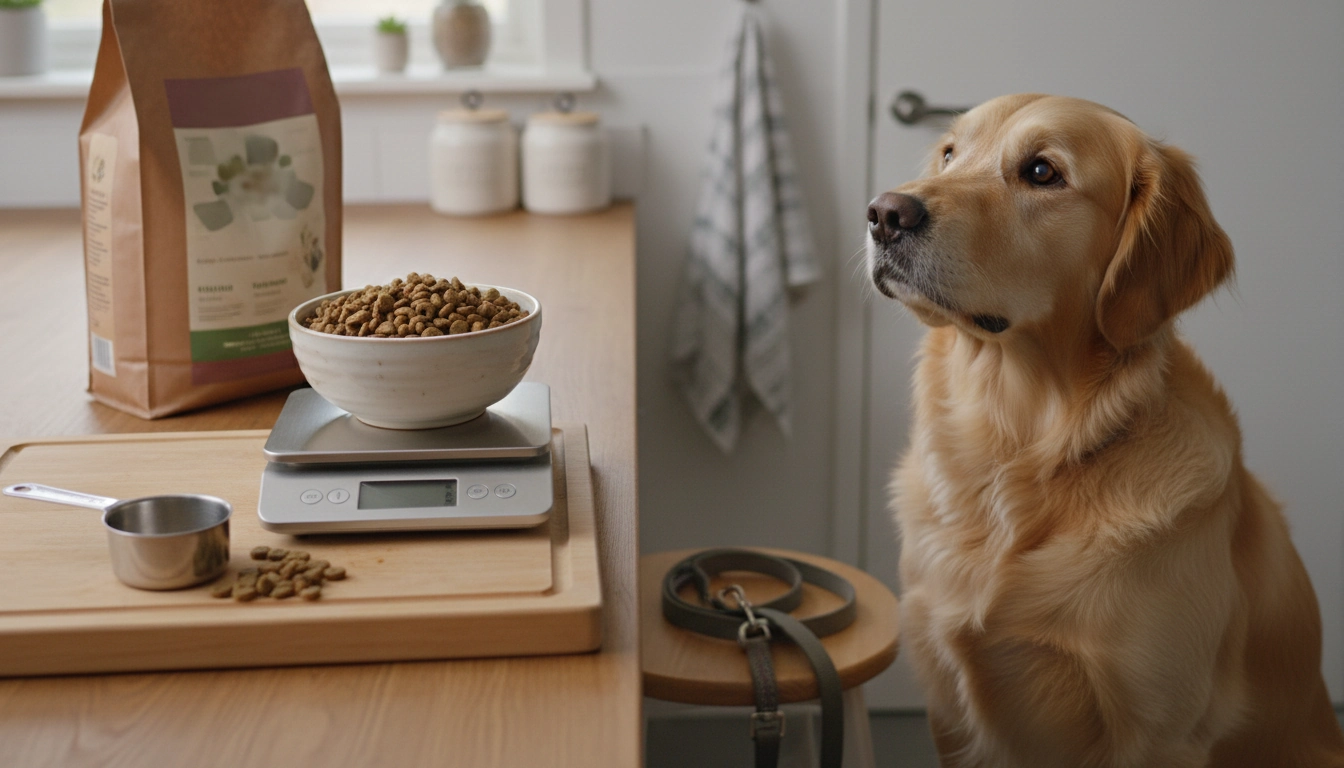
How much food should my overweight dog eat a day?
The right daily amount depends on your dog’s current weight, ideal (goal) weight, activity level, age, and the calorie density of the food. For safe weight loss, most overweight dogs do best when you feed based on their ideal body weight and aim for a slow, steady loss—typically about 1–2% of body weight per week.
Start with calories, not cups
Cups can be misleading because kibble calories vary widely. A practical starting target for many dogs in a weight-loss phase is roughly 25–30 calories per pound of ideal body weight per day, then adjust based on progress. Example: if your dog’s goal weight is 40 lb, a starting range might be about 1,000–1,200 calories/day. Your veterinarian may recommend a different target if your dog has medical conditions or needs a slower plan.
Divide meals and measure precisely
Split the daily calories into two or three meals to reduce hunger and begging. Measure food with a kitchen scale when possible, and keep treats to 10% or less of total daily calories. If treats are a problem, swap to lower-calorie options (like small pieces of plain cooked lean meat or crunchy vegetables your dog tolerates) and count them in the daily total.
Adjust every 2 weeks using real data
Weigh your dog every 1–2 weeks, track body condition, and adjust portions if weight loss is too fast or too slow. If there’s no change after two weeks, reduce total calories by about 5–10% or increase low-impact activity, then reassess.
For a step-by-step plan with portion guidance, treat tips, and easy movement ideas, see this dog weight loss guide.
FAQ
How do I know if I’m underfeeding my dog during weight loss?
Signs include extreme lethargy, constant frantic hunger, weakness, or rapid weight loss beyond about 1–2% per week. If you notice these, increase calories slightly and check in with your veterinarian to confirm a safe target.
















Leave a comment