Oily Scalp Routine: Daily, Weekly, and Reset Steps
A Practical Routine for Oily Scalps: What to Do Daily, Weekly, and When Nothing Seems to Work
Scalp oiliness can feel like a moving target: freshly washed roots at breakfast, shine by lunch, and flat hair by evening. The goal isn’t to “strip” the scalp—it’s to steady it. Our team uses the routine below as a calm, repeatable baseline for cleansing, conditioning, styling, and simple habit tweaks that support balanced scalp health over time. You’ll also find an easy checklist approach so you can track what actually helps (instead of guessing).
What scalp oiliness is (and what it isn’t)
Scalp oil (sebum) is normal. It protects skin, supports the barrier, and keeps hair flexible. “Oily scalp” usually means sebum shows up faster than you’d like, often amplified by product buildup, sweating, overwashing, or an irritated scalp barrier.
It’s also common for oiliness to coexist with dryness: your scalp can feel tight or itchy while still looking oily, especially after harsh cleansing or heavy styling products. If you’re seeing flakes and redness that persist, that can point to irritation or dandruff-like concerns—worth a professional check-in if it doesn’t improve. For general scalp guidance, the American Academy of Dermatology shares practical tips for managing dandruff here.
The 3 most common causes of fast-greasy roots
1) Buildup on the scalp
Dry shampoo, conditioners that hit the roots, waxes/silicones, and long stretches without a deeper cleanse can leave an “invisible coating.” That coating makes oil look worse and hair feel limp, even if your scalp isn’t producing dramatically more sebum.
2) Over-cleansing or aggressive scrubbing
Scrubbing hard or chasing a squeaky-clean feel can irritate the scalp and weaken comfort over time. The result is often a cycle: more sensitivity, more “reactive” oiliness in appearance, and more temptation to wash harshly again.
3) Lifestyle and environment
Sweat, hats/helmets, high humidity, frequent touching, and constant brushing can move oil down the hair shaft faster and make roots appear greasy earlier in the day.
A simple routine that supports an oily scalp (without over-correcting)
Cleanse with intention
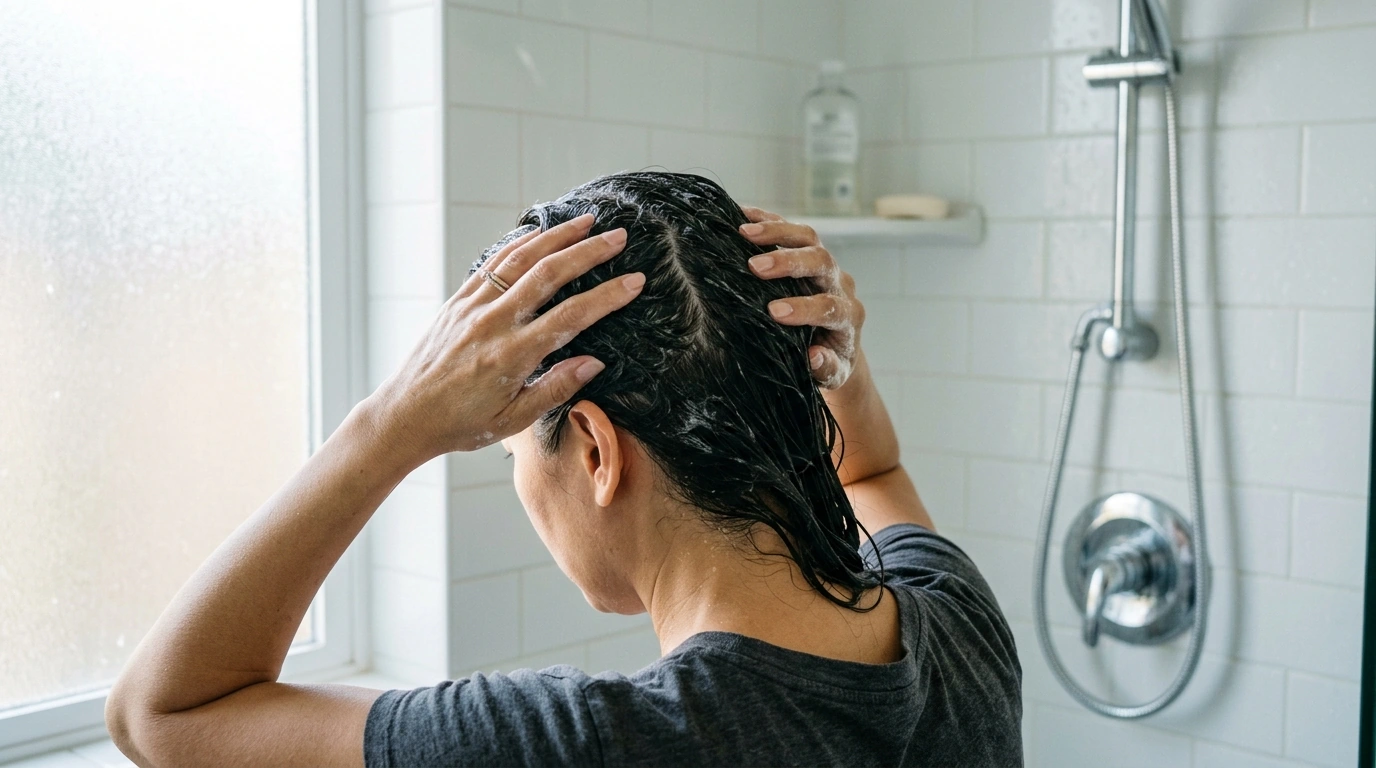
On wash days, put shampoo where oil lives: the scalp. Use your fingertips (not nails), massage gently for 30–60 seconds, and rinse thoroughly. If you’re using heavier styling products, a second quick shampoo pass can help—still gentle, just more complete.
Condition strategically
Conditioner is for your lengths, not your scalp (unless the formula is specifically designed for scalp use). Apply from mid-lengths to ends, use enough for slip, then rinse well. This single shift—keeping conditioner off roots—often makes “day-two grease” noticeably easier to manage.
Dry shampoo as a tool, not a foundation
Hands off roots + smarter styling
Daily vs. Weekly Oily Scalp Care Rhythm
| When | What to do | Why it helps |
|---|---|---|
| Daily (or as needed) | Keep conditioner off the scalp; avoid heavy root products; minimize touching | Reduces buildup and oil spread |
| Wash days | Scalp-first shampooing; thorough rinse; gentle massage | Cleans without triggering extra irritation |
| 1–2× weekly | Clarify or deep-cleanse (based on buildup level) | Resets scalp and removes residue that traps oil |
| Weekly | Clean brushes/comb; change pillowcase | Prevents re-depositing oil and styling residue |
| As needed | Swap styling products if hair feels coated/flat | Cuts the “invisible buildup” that makes roots look greasy |
Choosing products for an oily scalp: what to look for
A checklist approach: track patterns so the routine becomes easier
When oiliness comes with itch, flakes, or irritation
If your scalp feels tender, skip harsh scrubs and aggressive “detox” routines. Comfort and barrier support matter. If flakes persist, consider whether it’s residue buildup versus a dandruff-like pattern; targeted shampoos can help, but consistency is key. For an overview of seborrheic dermatitis (a common dandruff-related condition), Cleveland Clinic explains symptoms and care options here.
Put the plan into action with a guided routine and printable checklist
If you want a step-by-step structure you can follow without overthinking, our team created Your Ultimate Guide to Taming Scalp Oiliness | Oily Scalp Care eBook, Hair Care Guide, Digital Download, Scalp Health Checklist. It’s designed to help you build a realistic wash schedule, decide when clarifying is actually needed, and stay consistent long enough to see results.
And if your oil timeline is heavily influenced by commuting, workouts, or helmet/hat days, keeping your hair essentials organized can make the routine easier to stick to. Our Waterproof Anti-Theft Laptop Backpack with USB Charging Port – Fits 15.6″ Laptop is a practical way to carry a spare scrunchie, mini brush, or travel dry shampoo so you’re not improvising with whatever’s in your car or desk.
FAQ
Does washing hair more often make the scalp produce more oil?
Sebum production is mainly driven by biology, but the way your scalp feels can be influenced by irritation. Frequent harsh washing can make your scalp feel more reactive and oil more noticeable, while washing as often as you need with a gentle, scalp-focused routine is typically fine.
How often should an oily scalp be clarified?
Many people do well clarifying about 1–2 times per week or less, depending on how much dry shampoo and styling product you use. If your hair feels coated, roots fall flat quickly, or your usual shampoo suddenly “stops working,” it’s a common sign a reset wash may help.
Can dry shampoo make oily roots worse over time?
It can if you layer it repeatedly without proper cleansing, because residue builds up and can trap oil at the roots. Using it earlier (before heavy oil shows), brushing it out well, and keeping regular wash/clarify habits helps prevent that cycle.

















Leave a comment