Best Haircuts for Round Faces: Flattering Cuts & Bangs
What haircut is most flattering for a round face shape?
The most flattering haircuts for a round face shape are the ones that add visual length and create definition around the cheeks and jaw. In practice, that usually means styles with longer layers, angled lines, and a bit of height at the crown rather than cuts that stop at the widest part of the face.
Top flattering haircut picks for round faces
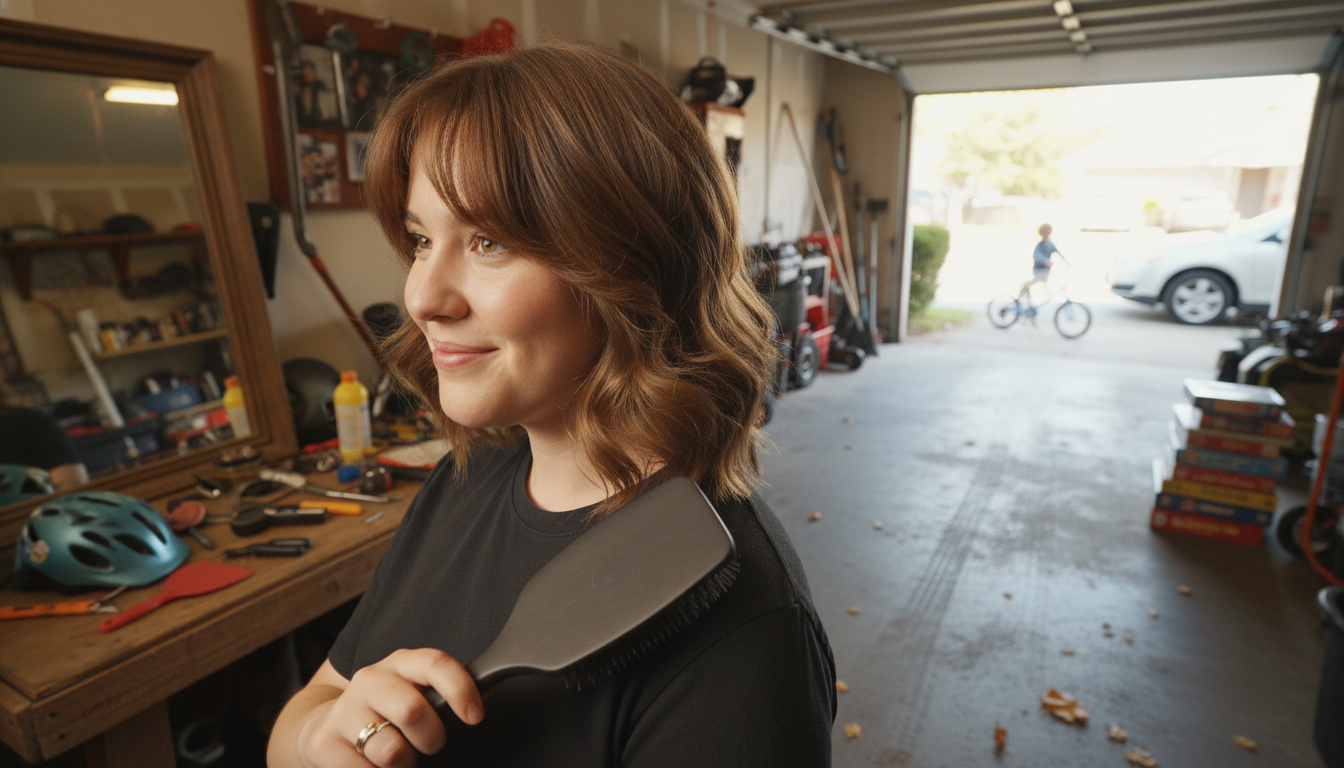
A collarbone-length lob with long layers is a go-to because it skims past the cheeks and keeps the silhouette streamlined. Ask for soft, face-framing pieces that start below the cheekbones to avoid adding width right where the face is roundest.
A long, layered cut (especially with subtle movement through the ends) is another standout. Length naturally elongates a round face, while layers keep hair from falling into a “helmet” shape that can make the face look fuller.
An angled bob (longer in front) can be very flattering when the front pieces land below the chin. The forward angle creates strong lines that visually slim and sharpen the lower half of the face.
Bangs that tend to work best
Side-swept bangs and curtain bangs are often the most flattering because they break up the symmetry and create diagonal lines. Keep them longer and blended into layers, so they frame rather than box in the face.
Styling details that make any cut look better
A deep side part, light lift at the roots, and soft waves that start below the cheek area can all help a round face look more defined. If you wear your hair straight, a sleek finish with movement through the ends works well—just avoid tucking everything behind the ears if it makes the cheeks look wider.
What to avoid (most of the time)
One-length bobs that hit at cheek level, blunt micro-bangs, and ultra-rounded shapes can emphasize fullness. That said, hair texture and personal style matter—small adjustments like lengthening the front or adding a bit of crown volume can make a “tricky” cut work.
For more specific cut ideas and styling examples, visit the full guide: https://spiritine.com/what-haircut-is-most-flattering-for-a-round-face-shape/
FAQ
Do layers make a round face look thinner?
Yes—layers can create vertical movement and break up bulk at the sides, which helps a round face look longer and more contoured. The most flattering layers usually start below the cheekbones or around the chin.









Leave a comment