Stretch Tight Sandals Safely: Socks, Heat & Stretchers
How to stretch out tight sandals?
Tight sandals can usually be stretched safely with a little patience—especially if they feel snug across the straps or pinchy at the toes. The key is to expand them gradually so you don’t warp the sole, split stitching, or overstretch delicate materials.
1) Break them in with thick socks (best for mild tightness)
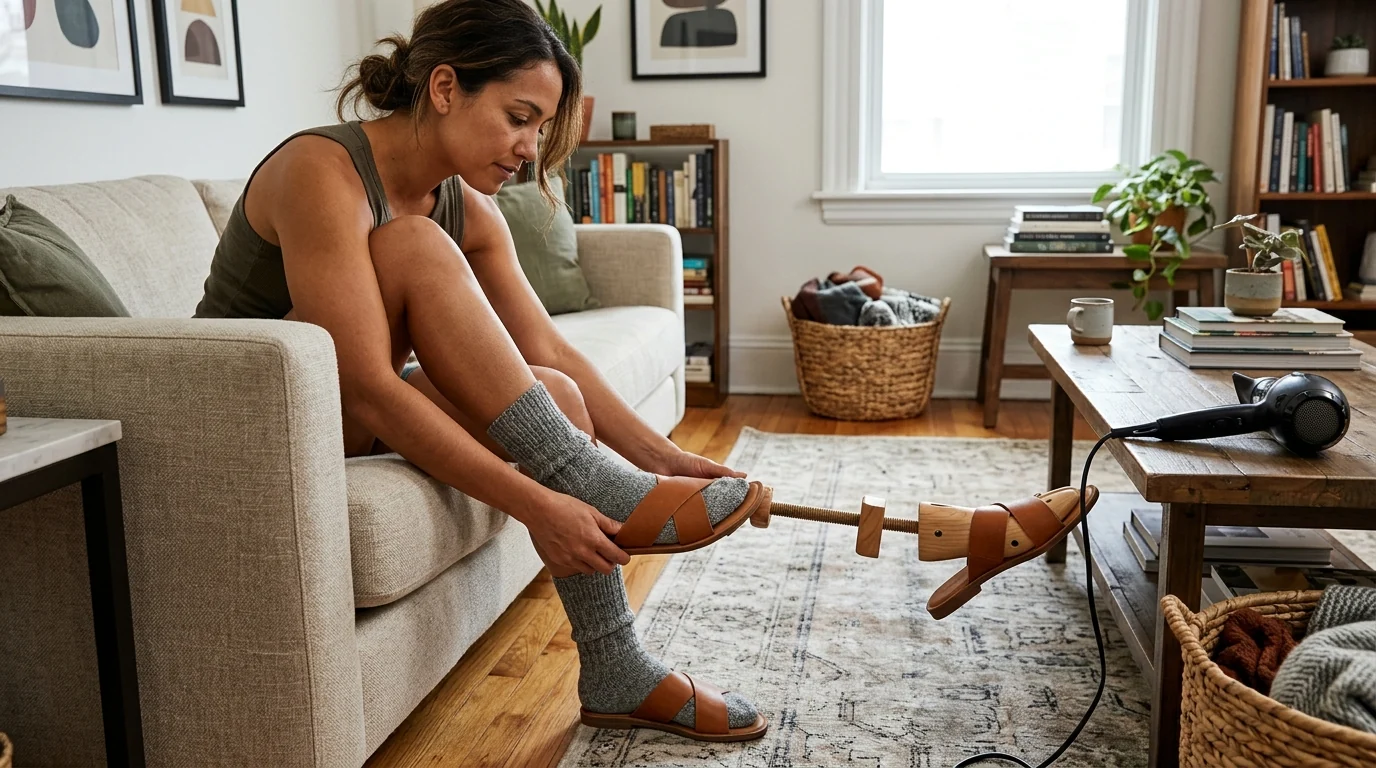
Put on thick socks, slide into the sandals, and wear them indoors for 15–30 minutes at a time. Focus on short sessions over a few days instead of forcing a long wear that can cause blisters. If the straps are the problem area, gently flex the upper with your hands between sessions.
2) Use gentle heat to relax the straps
Warmth can help many uppers become more pliable. Use a hair dryer on low or medium, aiming at the tight strap area for 20–30 seconds while the sandals are on (with socks). Then walk around for a few minutes as they cool. Avoid high heat, and be extra cautious with mesh, glued components, and any synthetic finishes.
3) Try a shoe stretcher or targeted strap stretch
For more consistent results, use a shoe stretcher or a stretching plug positioned where the sandal feels tight. Leave it in place for several hours, checking periodically. For sandals with multiple straps, you can also stuff the tight area with socks or soft cloth to apply steady pressure without straining buckles.
4) Use a leather stretching spray (only when material allows)
If the straps are leather (not faux leather), a leather stretching spray can help. Lightly mist the inside of the strap, wear the sandals with socks for a short period, and repeat as needed. Spot-test first, since finishes can darken or stain.
When to stop (and consider a different size)
If your toes spill over the edge, your heel hangs off, or the footbed length feels short, stretching won’t fix the fit. For more fit and styling context—especially for delicate, fashion-forward pairs—see the detailed guide here: https://spiritine.com/guide-bottega-veneta-stretch-mesh-sandals-fit-styling/.
FAQ
How do you loosen sandal straps without damaging them?
Loosen buckles first, then stretch gradually using thick socks and short wear sessions. For stubborn tightness, apply gentle heat or a material-appropriate stretching spray, stopping as soon as the straps feel comfortably secure.

















Leave a comment