Compact Indoor Charcoal Grill & Heating Oven (Brass)
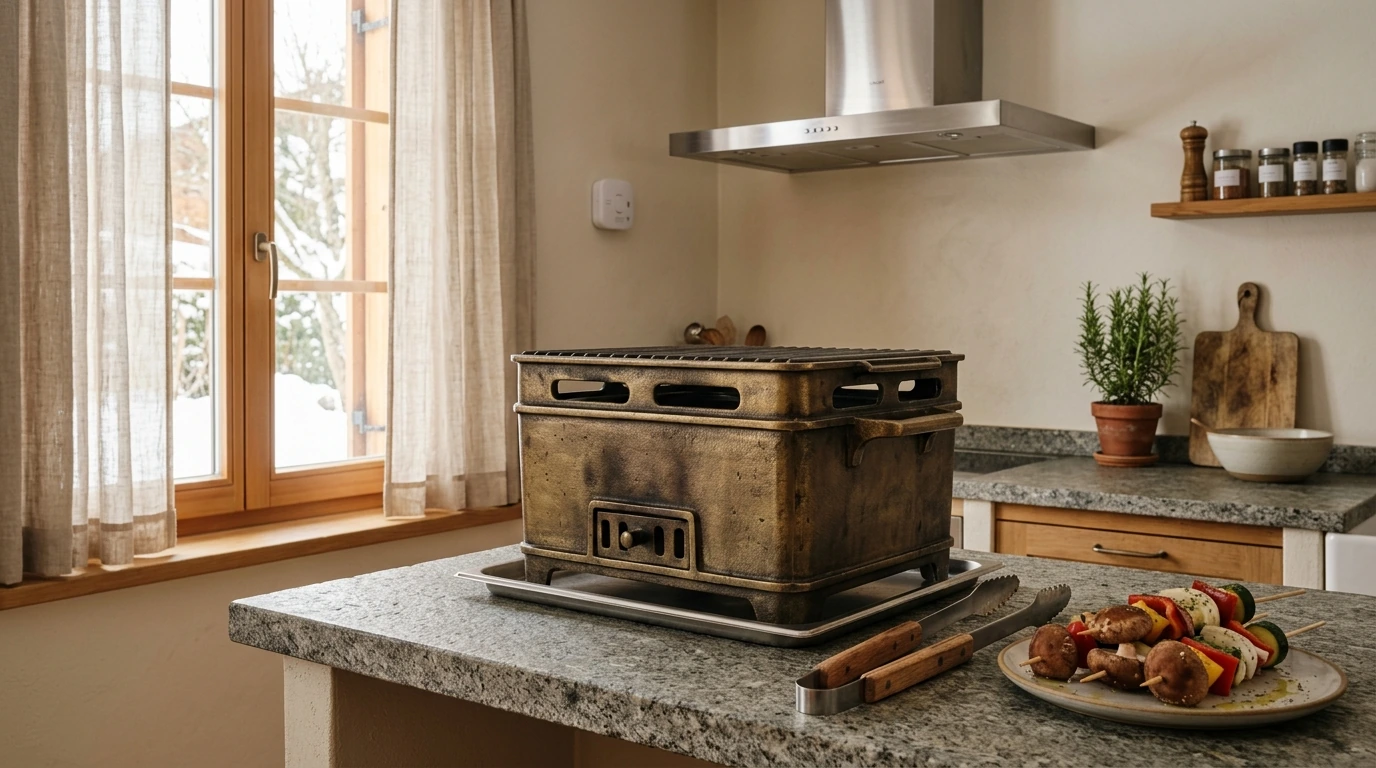
Indoor Charcoal Grill & Heating Oven: Compact Warmth, Brass Finish, Safety Enhanced
Bring the charcoal-grill experience indoors with a compact indoor charcoal grill heating oven that’s built to do two jobs in one: cook with live-fire flavor and provide comforting heat in a small space. This brass-finish piece is made for cozy dinners, winter evenings, and settings where you want a traditional charcoal style without committing to an outdoor setup—while keeping “safety enhanced” at the center of how it’s used and placed.
What this compact indoor charcoal grill & heating oven is for
- Charcoal-style cooking indoors when outdoor grilling isn’t practical
- Warming a small area while food cooks (think table-side comfort during colder months)
- Serving and sharing: small-batch grilling for family-style meals
- Homes, studios, and compact kitchens where counter and floor space matter
- A classic look that pairs well with warm-toned interiors thanks to the brass finish
Design notes: compact footprint, brass finish, and an “always-on” safety mindset
- Compact format: easier to position on a sturdy, heat-resistant surface, and easier to store between uses.
- Brass finish: a traditional, display-worthy look that can stay out like a functional centerpiece when it’s cool and clean.
- “Safety enhanced” is a system: smart placement, airflow, careful fuel handling, and attentive operation work together. No single feature replaces responsible setup.
- Plan your station before lighting: stable base, clear perimeter, and a dedicated spot for tools and ash handling so you’re not improvising around a hot unit.
Cooking experience: what to expect from indoor charcoal heat
- Charcoal heat cooks differently than electric or gas: it’s radiant, fast near the source, and it rewards smaller portions and frequent turning.
- Best matches include skewers, sliced meats, thin cuts, mushrooms, peppers, onions, and quick-cooking seafood.
- Keep portions small and consistent so food finishes evenly without extended burn time indoors.
- Have a resting plan: move cooked items to a warm plate, not directly over active charcoal.
- Flavor control comes from fuel and timing: light clean, wait for steady heat, then cook with intention.
Safety and comfort checklist for indoor use
- Ventilation is non-negotiable: maintain strong airflow in the room before, during, and after use.
- Use a carbon monoxide (CO) alarm in the living space; test it and replace batteries on schedule. For CO basics, review guidance from the CDC.
- Heat-safe placement only: set the unit on a heat-resistant, non-wobbly surface and keep it away from curtains, paper goods, and low-hanging shelves.
- Create a no-traffic zone: prevent bumps and accidental contact—especially with children or pets.
- Fuel handling: keep charcoal dry, never use gasoline or inappropriate accelerants, and follow fuel label instructions.
- Ash management: let ashes cool fully, then move them to a non-combustible container with a lid; don’t put warm ash into household trash.
- Smoke control: choose cleaner-burning charcoal, avoid drippings that flare, and use an appropriate drip strategy (like a tray/foil if your setup allows) to reduce smoke events.
Quick indoor setup guide (before lighting)
| Step | What to do | Why it matters indoors |
|---|---|---|
| 1. Choose placement | Set on a sturdy, heat-resistant surface with a clear perimeter | Reduces tip risk and protects surrounding materials |
| 2. Prepare airflow | Create cross-ventilation and keep the room from getting stagnant | Helps manage smoke and reduces exposure to combustion byproducts |
| 3. Confirm monitoring | Ensure a CO alarm is present, powered, and tested | Adds a critical layer of awareness for indoor combustion |
| 4. Stage tools | Tongs, heat gloves, metal tray/container for ash, and a timer | Prevents scrambling while the unit is hot |
| 5. Plan food flow | Pre-portion food and keep raw/cooked plates separate | Shortens cook time and improves indoor hygiene |
For broader fire-prevention practices around grilling and heat sources, it’s also worth reviewing the NFPA grilling safety guidance and the U.S. EPA indoor air quality overview.
Care and long-term use: keep it clean, steady, and ready
- Let the unit and any ash cool completely before cleaning or moving.
- Remove ash routinely so airflow and heating performance stay consistent over time.
- Wipe exterior surfaces with a soft cloth; avoid harsh abrasives that can dull a brass finish.
- Store in a dry area to protect both appearance and function.
- Keep charcoal and lighting materials separate from cooking utensils to avoid odor transfer.
Who this is a strong fit for (and who should skip it)
Shop in our store
- Indoor Charcoal Grill & Heating Oven – Compact, Brass Finish, Safety Enhanced
- Waterproof Anti-Theft Laptop Backpack with USB Charging Port – Fits 15.6″ Laptop
- Creative Writing Exercises eBook | Prompts, Character & Plot Development Guide
FAQ
Can an indoor charcoal grill heating oven be used safely inside a home?
It can be used more responsibly indoors when you treat safety as a full setup: strong ventilation, a working CO alarm, heat-safe placement with clear space around it, attentive operation (never unattended), careful fuel handling, and fully cooled ash disposal. Indoor combustion always requires active monitoring and a plan for airflow before you light.
What foods work best on a compact indoor charcoal grill?
Quick-cooking foods in smaller, even pieces perform best—think skewers, thin-sliced meats, mushrooms, peppers, onions, and fast seafood. Keeping sizes consistent and turning more frequently helps you manage radiant charcoal heat without dragging out cook time.
How do you reduce smoke and lingering odors when cooking with charcoal indoors?
Use cross-ventilation and, if available, kitchen exhaust, choose cleaner-burning charcoal, and manage drippings to prevent flare-ups that create sudden smoke. Keep cook sessions shorter, and continue ventilating after cooking while you clean up and secure cooled ash.














Leave a comment