AI Skincare Routine Builder: A Simple Plan That Sticks
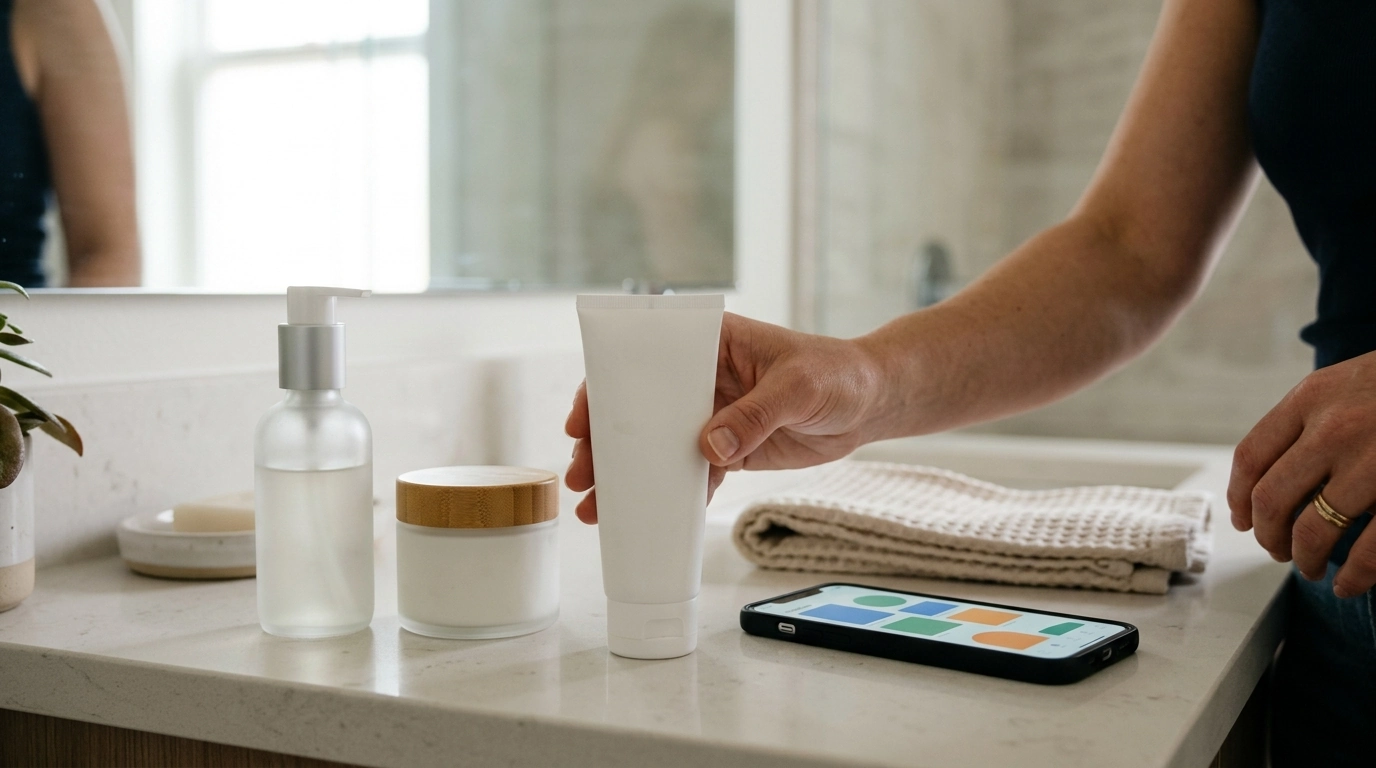
How AI Can Help Craft Your Perfect Skincare Routine (Without the Guesswork)
Skincare gets confusing fast: too many actives, too many opinions, and a routine that never seems to match real life. AI can simplify the process by organizing your skin details, preferences, and product constraints into a routine that’s clear, consistent, and easy to adjust. Our team built our skincare ebook to help you turn “I don’t know what to use” into a routine you can actually follow—morning, night, and week by week.
Why routines fail (and why “more products” isn’t the answer)
Most routines don’t fall apart because you picked the “wrong” cleanser. They fail because the plan doesn’t match how you live.
- Inconsistent steps: If your routine only works on perfect mornings, it won’t stick on busy ones.
- Incompatible actives: Layering multiple strong treatments can lead to irritation, which often looks like “my skin hates everything.”
- Switching too frequently: Constant product changes make it hard to tell what’s helping (or harming).
- Mismatch with budget/time: A 9-step routine is fragile if you realistically have 4 minutes.
Skin also changes with seasons, stress, hormones, and environment. A static routine often stops working—not because you “failed,” but because your routine didn’t evolve. In practice, clarity beats complexity: a smaller, consistent routine often outperforms a crowded shelf.
What AI is actually good at in skincare planning
AI shines when you use it as an organizer, not a miracle diagnostician. Here’s what it can reliably help with:
- Pattern sorting: Turning scattered info (skin type, sensitivity, goals, climate, routine length) into an organized plan you can follow.
- Constraint-based building: Respecting your boundaries—budget, fragrance preferences, cruelty-free requirements, and how many steps you’ll actually do.
- Reducing trial-and-error: Proposing a sensible step order, introducing actives gradually, and suggesting what to track so adjustments are simpler.
- Translation help: Converting ingredient lists and marketing claims into plain-language expectations (what it can do, how fast, and what risks to watch for).
The inputs that make AI recommendations useful (and safer)
The quality of your routine depends on the quality of your “skin snapshot.” Before you ask for help, gather these details:
- Your snapshot: Skin type, top 1–2 goals, known sensitivities/allergies, and what has irritated your skin before.
- Your current products: Cleanser, moisturizer, sunscreen, and any treatments (include strength/percentage if you know it).
- Your real-life context: Indoor/outdoor time, sweating, mask-wearing, shaving, climate, and how many minutes you’ll realistically spend.
- Your boundaries: Maximum number of steps, a weekly/monthly budget range, and whether you want minimal maintenance or a treatment-focused plan.
If sunscreen is part of your plan (it should be), it helps to follow basic, medically grounded guidance like the American Academy of Dermatology’s everyday recommendations and the FDA’s sunscreen overview: https://www.aad.org/public/everyday-care and https://www.fda.gov/drugs/understanding-over-counter-medicines/sunscreen-how-help-protect-your-skin-sun.
A simple AI-to-routine workflow that keeps you in control
Step 1: Define one outcome for the next 4–6 weeks
Step 2: Build a basic AM/PM routine first
Step 3: Add treatments slowly with a ramp-up schedule
Step 4: Make a “stop list” before you start
Step 5: Track signals that actually help you adjust
AI Skincare Prompt Toolkit (copy, paste, personalize)
| Goal | What to tell AI | What to ask for | What to double-check |
|---|---|---|---|
| Barrier repair | Skin feels tight, stings with products, flaky patches; prefer 3 steps max | AM/PM routine with gentle ingredients + a 2-week reset plan | Fragrance/essential oils, over-exfoliation, too many actives at once |
| Acne + sensitivity | Breakouts on chin/cheeks; past irritation with strong acids; sunscreen pills under makeup | Minimal routine + one acne treatment option and a ramp-up schedule | Treatment frequency, dryness risk, and sunscreen compatibility |
| Hyperpigmentation | Dark spots post-breakout; skin tolerates vitamin C; wants budget-friendly options | AM/PM routine + ingredient options and timeline expectations | Sun protection plan; irritation triggers that can worsen discoloration |
| Anti-aging basics | Fine lines; new to retinoids; wants low-maintenance routine | Beginner retinoid plan + moisturizing strategy + “what not to mix” list | Retinoid strength, introduction pace, and daytime SPF consistency |
How our ebook helps you turn AI output into a real routine
AI can generate ideas quickly, but you still need a structure that keeps your routine realistic and stable. That’s exactly what our team designed How AI Can Help Craft Your Perfect Skincare Routine | Smart Beauty Ebook Guide | ai for creating a personalized skincare routine to do.
If you’re also trying to reduce decision fatigue in the rest of your day, our team built a similar “make it easy to follow” approach for getting dressed: Your Daily Outfit Shortcut: Time-Saving Outfit Combinations for Effortless Style.
Smart safety rules: what AI can’t decide for you
Making the routine stick: personalization beyond products
A clear next step: build your personalized plan in one evening
FAQ
Can AI replace a dermatologist for skincare decisions?
AI can help you organize a routine and understand skincare basics, but it can’t diagnose or treat medical skin conditions. If you have persistent, severe, painful, or worsening issues, professional care is the safest next step.
What information should be included when asking AI to build a skincare routine?
Include your skin type, top goals, sensitivities/allergies, current products, past reactions, climate/lifestyle details, time and budget limits, and preferred product types (like fragrance-free or minimal steps). The clearer your inputs, the more practical and consistent the routine will be.
How often should a routine be changed once AI suggests a plan?
Give most routines about 4–6 weeks of consistency before making changes, unless you’re experiencing irritation that calls for simplifying immediately. When you adjust, change one variable at a time so you can tell what caused the difference.

















Leave a comment