Vinegar for Faded Clothes: What It Can (and Can’t) Do
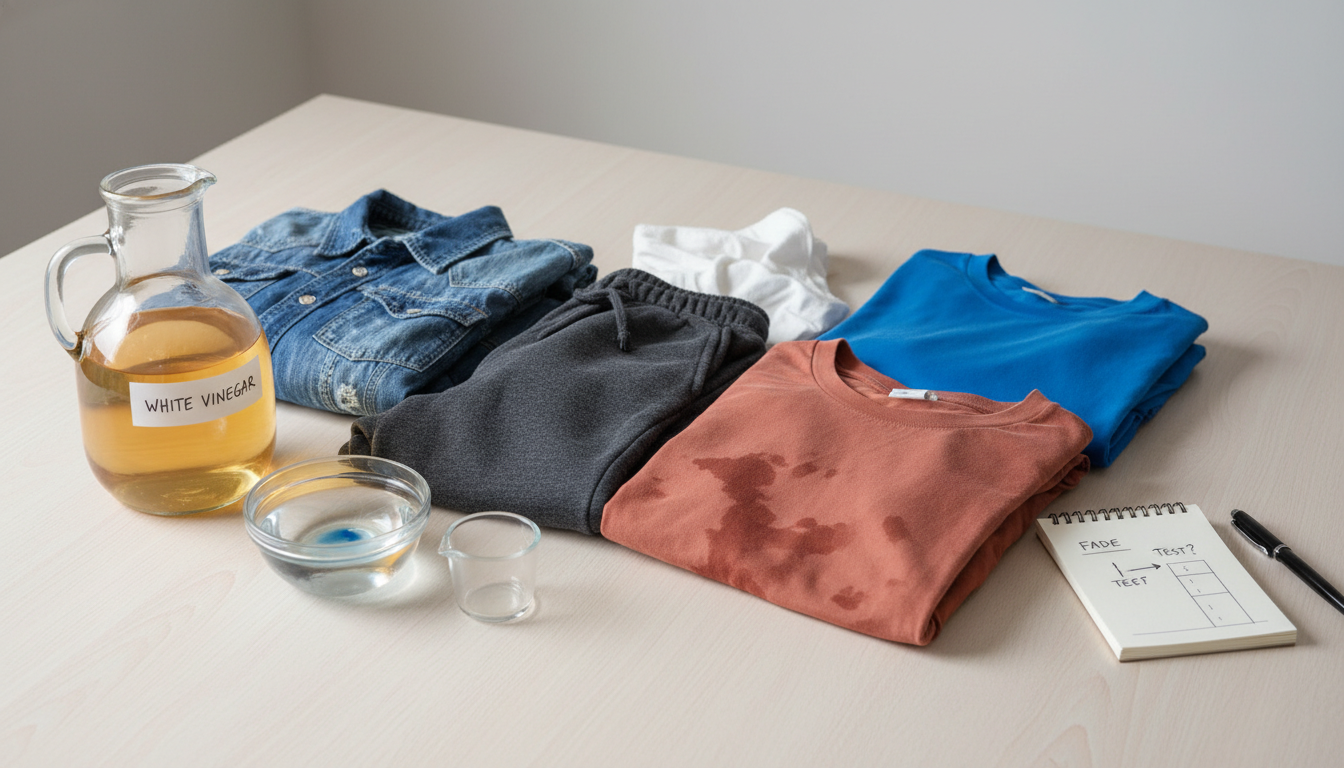
Does vinegar restore faded clothes?
Vinegar can help make some faded clothes look better, but it isn’t a true “color restorer.” White distilled vinegar works mainly by dissolving detergent buildup, mineral deposits from hard water, and residue that can leave fabric looking dull or gray. Once that film is removed, colors may appear brighter and blacks may look deeper—even though the dye itself hasn’t been replaced.
When vinegar can help
Vinegar is most useful when fading is actually “dulling.” If a shirt or towel looks muted after many washes, a vinegar rinse can improve the finish by clearing leftover soap and softener. It can also help reduce stiffness that makes fabric look worn, and it may cut down on lingering odors that sometimes come along with buildup.
When vinegar won’t fix fading
If dye has genuinely broken down from hot water, harsh detergents, chlorine bleach, or long sun exposure, vinegar can’t rebuild that lost pigment. You might see a small cosmetic improvement, but the garment won’t return to its original shade. In those cases, better options are fabric dye, a color-depositing laundry product, or reserving the item for casual wear.
How to use vinegar safely
For a simple brightness boost, add about 1/2 to 1 cup of white distilled vinegar to the rinse cycle (or to the fabric softener compartment) in a regular wash. Avoid mixing vinegar with bleach or bleach-based products, and test first on delicate or specialty fabrics if you’re unsure. Vinegar is generally color-safe, but it’s still smart to check care labels and use cool to warm water for colors you want to protect.
For more details and practical laundry tips, see the full guide here: https://spiritine.com/blog/does-vinegar-restore-faded-clothes/.
FAQ
Does vinegar set color in fabric?
Vinegar may help rinse out excess dye and residue, which can reduce some bleeding in future washes, but it doesn’t permanently “set” modern dyes the way a true dye fixative can.














Leave a comment