Best Order to Learn Calligraphy: Strokes to Words
What is the best order to learn calligraphy alphabets for beginners (strokes, lowercase, uppercase, words)?
The fastest way to feel progress in modern calligraphy is to learn in the same order your hand actually builds letters: strokes first, then lowercase, then uppercase, then words. That sequence trains muscle memory, keeps spacing consistent, and prevents the common beginner habit of “drawing” letters instead of writing them.
1) Start with basic strokes (your calligraphy “building blocks”)
Begin with warm-ups and drills: entry strokes, underturns, overturns, compound curves, ovals, and ascending/descending loops. Focus on two things only: steady rhythm and consistent pressure changes (light upstrokes, heavier downstrokes). Spend a few minutes on strokes every session—even after you move on—because they’re the quickest way to improve control.
2) Move to lowercase letters next
Lowercase is the backbone of everyday lettering, and most modern scripts are built around a few repeating shapes. Learn letters in families (for example, i/u/w/t share underturns; n/m/h share compound curves; a/d/g/q rely on ovals). Practice each family until the letters feel similar in slant, height, and spacing.
3) Add uppercase after lowercase feels comfortable
Uppercase letters are more decorative, less standardized, and easier to overcomplicate. Once your stroke control and lowercase consistency are solid, capitals become much less frustrating. Start with simpler capitals that echo lowercase shapes, then explore more flourish-heavy styles as your confidence grows.
4) Practice words (then short phrases) to connect everything
Words teach real-world spacing, consistent letter connections, and baseline control. Start with simple words using familiar letters (like “minimum,” “time,” or “hello”), then mix in ascenders/descenders and varied letter widths. Finish sessions with a few names or short phrases to apply what you drilled.
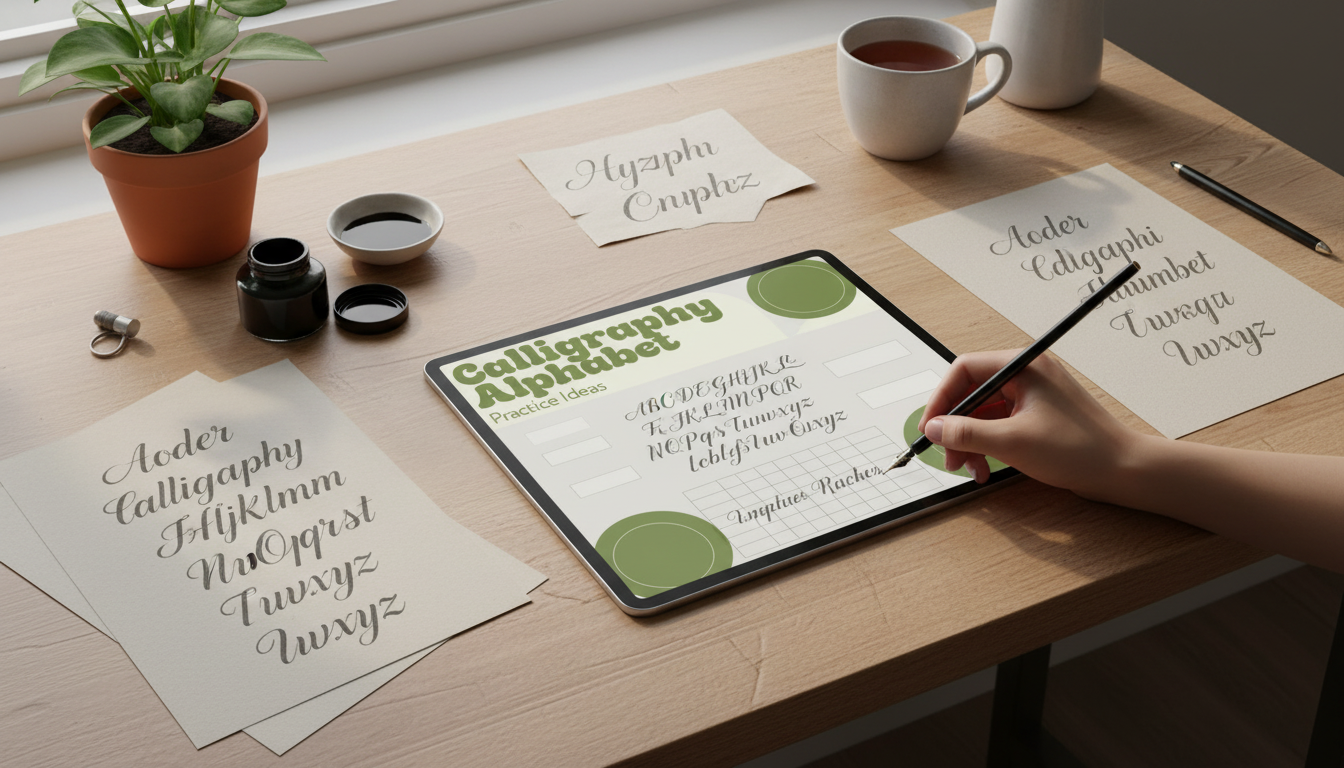
For printable practice ideas and a structured routine, follow this step-by-step guide: modern calligraphy alphabet practice drills and routines.
FAQ
How long should a beginner practice calligraphy each day?
Ten to twenty minutes a day is enough to build muscle memory without burning out. Consistency matters more than long sessions, especially while learning pressure control.
















Leave a comment