Dog Body Condition Score: Check Overweight at Home
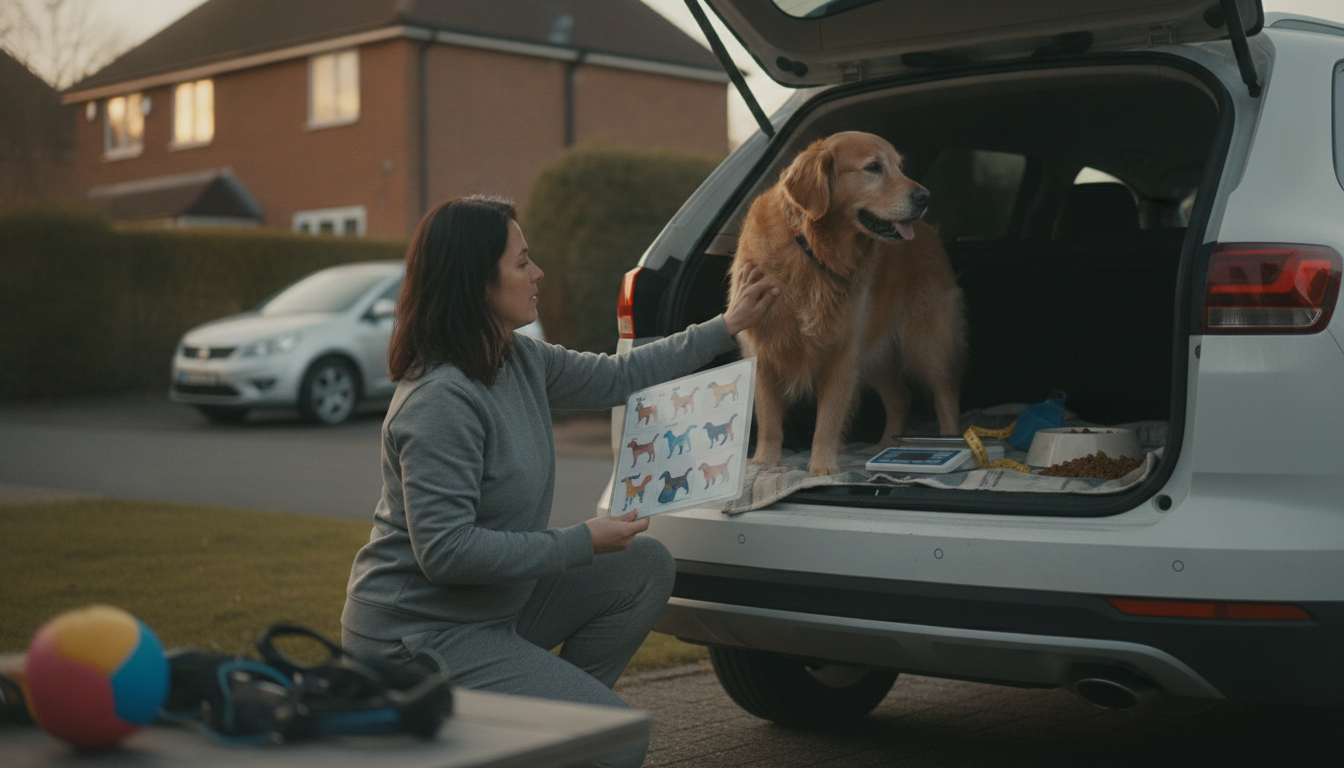
How can I tell if my dog is overweight using a body condition score at home?
Answer
A body condition score (BCS) is a quick, hands-on way to estimate whether your dog is too thin, ideal, or overweight. Most vets use a 1–9 scale, where 4–5 is typically ideal, 6–7 indicates overweight, and 8–9 indicates obesity. You can do a reliable check at home in a few minutes by using both touch and a side/top view.
1) Feel the ribs (the “hands test”). With your dog standing, run your fingertips lightly over the ribcage. In an ideal BCS, you should feel ribs easily with a thin layer of fat—similar to running your fingers over the back of your hand. If you have to press to find the ribs, that suggests a higher BCS (often 6+). If the ribs feel sharp and very visible, your dog may be underweight.
2) Look for a waist from above. Stand above your dog and look down. An ideal dog has a noticeable “hourglass” shape behind the ribs. If the back looks straight like a tube (no inward curve), that’s a common sign of overweight. A bulging shape outward behind the ribs can suggest obesity.
3) Check the abdominal tuck from the side. From the side, the belly should rise up behind the ribcage. Little to no tuck, or a belly that hangs, points toward excess body fat. Also note fat pads over the hips, at the base of the tail, and along the chest/neck—these areas can become more pronounced as BCS increases.
4) Track changes over time. Repeat the BCS check every 2–4 weeks, especially after diet changes. Pair it with monthly weigh-ins if possible. Small gains can be easier to correct early than after they accumulate.
For a step-by-step walkthrough and more detail on what each score looks and feels like, visit the full guide here.
FAQ
What should I do if my dog’s body condition score is too high?
Start by confirming the score with your veterinarian, then adjust daily calories and treats while increasing appropriate exercise. A controlled feeding plan and regular rechecks help bring the score down safely without compromising nutrition.

















Leave a comment