LEGO Build Checklist: Themes, Constraints & Fun Prompts
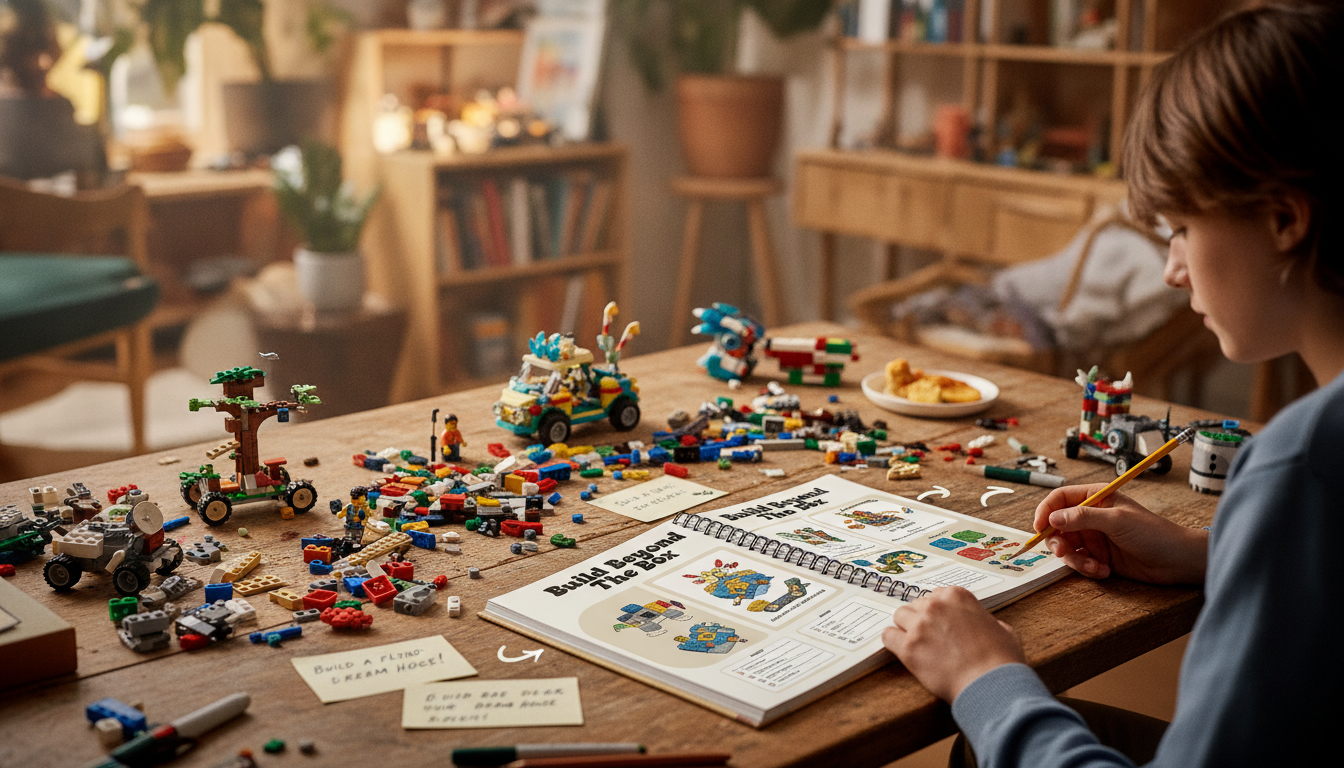
Why checklists unlock better builds
A creative checklist doesn’t tell anyone what to build—it removes the “blank page” feeling so hands can start moving. Instead of staring at a pile of bricks, a builder gets a clear first move (pick a theme), a manageable next move (add a constraint), and a simple definition of “done” (a finishing rule). For more guidance, see LEGO Projects to Make at Home – Instructables.
- Reduces decision overload by offering a clear starting point and next step
- Adds light structure while keeping freedom for personal style and experimentation
- Encourages iteration: build, review, tweak, and rebuild without pressure
- Works with any collection size—from a small bucket to a full organizer
This kind of structure also mirrors how designers work: quick prototypes first, then upgrades. The result is less “perfect build” pressure and more fun momentum. For further reading, see LEGO Building Ideas For Kids – Little Bins and Bricks.
Quick-start: pick a theme, a constraint, and a finishing rule
For a fast build session, use a simple recipe: choose a theme, add one playful limitation, and finish with one visible goal. The theme gives direction, the constraint sparks originality, and the finishing rule makes the build feel complete.
- Choose a theme: space, underwater, city, fantasy, nature, vehicles, or everyday life
- Add one constraint: only two colors, only slopes, only 25 pieces, or no minifig parts
- Set a finishing rule: include a moving feature, a secret compartment, or a “before/after” change
- Timebox it: 10 minutes for kids, 20 for teens, 30+ for adults who enjoy refining details
Fast Build Recipe Ideas
| Theme | Constraint | Finishing Rule | Best For |
|---|---|---|---|
| Jungle | Only green + one accent color | Add an animal habitat detail | Kids |
| Sci‑fi lab | Only 40 pieces | Include a control panel pattern | Teens |
| Street scene | No standard bricks (plates/slopes only) | Show a story moment | Teens & Adults |
| Castle | No right angles (use hinges/curves) | Add a hidden passage | Adults |
| Ocean | Use at least 3 transparent pieces | Create a sense of depth | All ages |
Creative build checklist (mix-and-match ideas)
Use the checklist like a creative game board: pick one item from two or three categories and combine them. The goal isn’t complexity—it’s a strong “read” from a few choices that push the build in a new direction.
- Movement: add a lever, hinge, turntable, rolling base, or a simple gear effect
- Surprise: include a secret drawer, trap door, removable roof, or “reveal” panel
- Scale shift: build the same object as tiny, normal, and oversized versions
- Mashup: combine two unrelated things (bakery + spaceship, crab + bulldozer)
- Perspective: design a facade in front and a detailed interior behind it
- Texture: try one area with repeating patterns (tiles, grille, studs-as-texture)
- Story hook: build a scene that shows “problem, action, result” in one snapshot
- Nature study: recreate a real animal/plant using only 3–5 key features
- Architecture: focus on doors/windows/rooflines and a strong silhouette
- Microbuilds: create a set of 6 tiny builds that share a theme (icons/collectibles)
For extra variety, rotate your “signature element” each session: a color pop, a repeating motif, or one unusual shape used three times.
Age-based challenge levels
Kids: simple, visible wins
Keep constraints friendly and concrete: two colors, 20–30 pieces, and one feature goal (door, wheels, wings). A good “done rule” for kids is “It stands up and has one cool action.”
Teens: design rules + remix energy
Teens often enjoy constraints that feel like real design problems: a piece limit plus a palette, and one guiding principle like symmetry, balance, or function. Remixes work especially well—take something familiar and rebuild it into a different theme.
Adults: prototype, refine, and tell a story
Adults typically get satisfaction from iteration: prototype for shape, improve stability, refine details, then add storytelling. Even a small build feels “finished” when it has a clear silhouette and one intentional detail that communicates purpose.
Group builds: role-based teamwork
Assign simple roles to keep everyone engaged: designer (calls the shots), parts manager (finds pieces), tester (checks stability/movement), and storyteller (names it and describes what’s happening).
Build prompts for different moods (checklist as a creative game)
- Speed round: build the first thing that fits the checklist in 8 minutes—no rebuilding
- Remix round: take an old set build and change 3 major features (theme, function, and colorway)
- Mystery bag: randomize 15 pieces and design something that “could exist” in real life
- Silent build: build without talking for 10 minutes, then explain the story afterward
- Museum mode: build a display stand and a placard that names and describes the creation
If the goal is more narrative play, pair a build session with a short storytelling warmup. The Creative Writing Exercises eBook can be a fun companion when builders want names, characters, and mini “missions” for what they made.
How to keep builds sturdy and satisfying
Printable-style checklist tool
For an organized, ready-to-use list that makes choosing fast (especially for family nights or classroom free-build time), keep a dedicated guide on hand: Build Beyond the Box – LEGO Building Creative Ideas Checklist for Kids, Teens & Adults.
A ready-to-use ideas checklist guide
FAQ
What if there aren’t enough bricks for big builds?
Use microbuilds, small dioramas, or a strict piece limit and focus on silhouette, one moving feature, and one story detail. Small builds often look cleaner and are faster to iterate.
How can LEGO builds stay fun for teens and adults?
Add constraints, iteration rounds, and goals like function, realism, or storytelling. Remix older builds and treat each rebuild like a new “version” with one upgraded feature.
How long should a creative build session be?
Plan 10–15 minutes for quick challenges, 20–30 minutes for deeper builds, and longer sessions for refinement. Stop when the “done rule” is met so the build ends on a satisfying win.











Leave a comment